


Exploring Sculpture: Clay Techniques for Early Childhood
Introducing young children to sculpture through clay techniques can ignite their creativity and enhance their developmental skills. Clay is a tactile material that allows children to explore their senses, providing a hands-on experience that is both educational and fun. This guide delves into the benefits of preschool art projects, offering insights and practical steps for educators and parents. By engaging in clay activities, children can develop fine motor skills, enhance hand-eye coordination, and boost their creativity.
Let’s explore how clay can become a medium for young artists to express themselves and develop essential skills. For more insights on engaging young learners, you might find our article on Art Education and Its Impact on Youth enlightening.
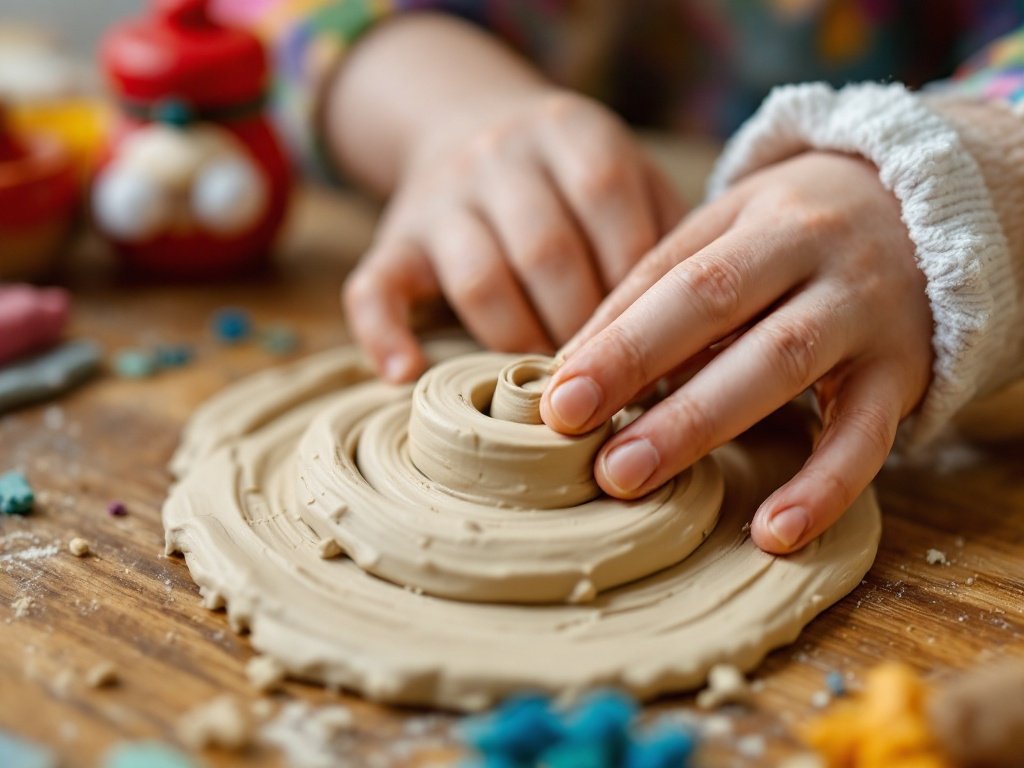
The Importance of Clay in Early Childhood Art
Clay is a versatile material that offers numerous benefits for young children. It engages their senses, allowing them to explore textures and forms in a way that is both stimulating and educational. Working with clay can improve fine motor skills, hand-eye coordination, and creativity.
According to reputable sources such as the National Association for the Education of Young Children (NAEYC), engaging in clay activities supports cognitive development and problem-solving abilities in early childhood. Additionally, clay projects can be tailored to fit various developmental stages, making them suitable for a wide range of age groups.
For a deeper dive into the benefits of art in early childhood, check out our blog post on The Role of Art in Child Development.
Essential Clay Techniques for Preschool Art Projects
Introducing basic clay techniques to preschoolers can be both fun and educational. Here are some simple methods to get started:
Pinching and Rolling: These techniques are foundational for young children. Pinching helps develop finger strength, while rolling clay into shapes can enhance coordination. Encourage children to create simple forms like balls and coils, which can be combined to make more complex sculptures. By mastering these basic techniques, children can gain confidence in their artistic abilities and begin to experiment with more intricate designs.
Coiling and Slabbing: As children become more comfortable with clay, introduce coiling and slabbing. These techniques allow for the creation of larger structures. Coiling involves rolling clay into long strands and stacking them, while slabbing uses flat pieces of clay to build forms. These methods promote spatial awareness and planning, as children must think ahead about how their pieces will fit together. By engaging in these activities, children can develop critical thinking skills and learn to approach problems creatively.
Imprinting and Texturing: Encourage children to explore textures by imprinting objects into clay. Leaves, shells, and textured fabrics can create interesting patterns. This activity not only stimulates creativity but also introduces children to the concept of texture in art. By experimenting with different materials, children can learn about the properties of various objects and how they can be used to create unique designs.
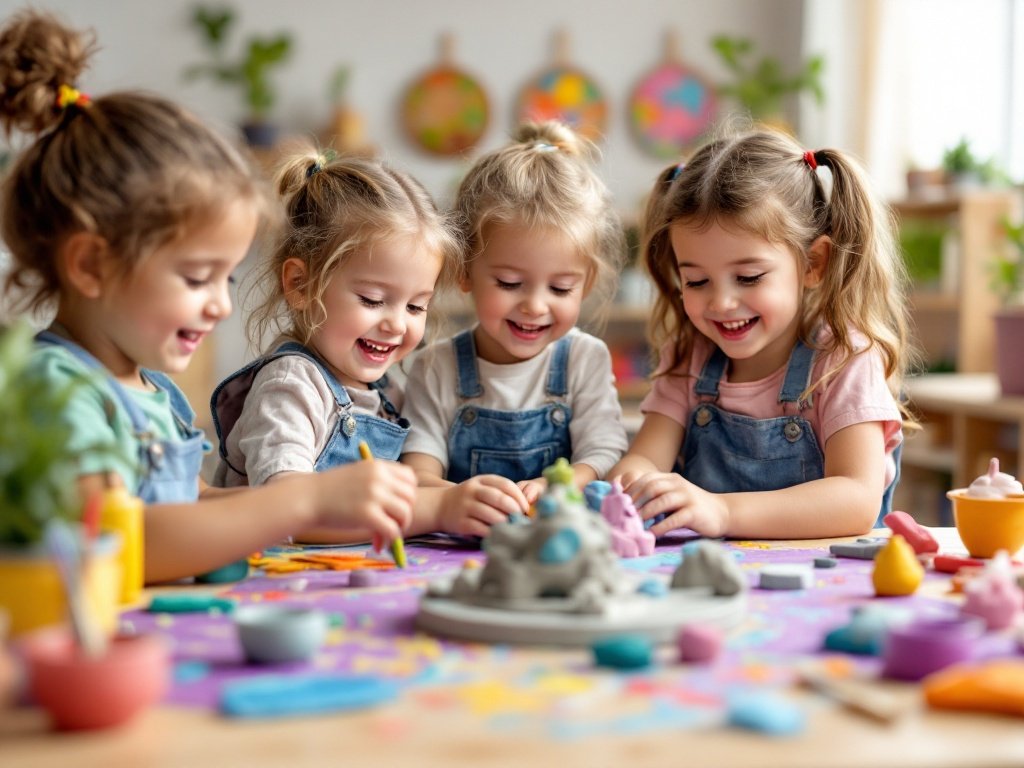
Setting Up a Clay Art Station for Creative Activities
Creating a dedicated space for clay activities can enhance the learning experience. Here are some tips for setting up an engaging clay art station:
Materials and Supplies: Ensure you have a variety of clay types and tools available. Soft, non-toxic clay is ideal for young children. Include tools like rolling pins, plastic knives, and cookie cutters to inspire creativity. Having a range of preschool art supplies encourages exploration and experimentation, allowing children to try new techniques and discover their preferences.
Organized Space: A well-organized space fosters creativity. Use trays or mats to define individual work areas and keep tools within easy reach. This setup helps children focus on their projects and maintain a clean environment. By providing a structured workspace, children can concentrate on their tasks and feel more confident in their abilities.
Inspiration and Display: Display examples of clay art to inspire young artists. Rotate these displays regularly to introduce new ideas and techniques. Encourage children to showcase their creations, fostering a sense of pride and accomplishment. By celebrating their achievements, children can develop a positive attitude towards art and feel motivated to continue exploring their creativity.
Incorporating Clay into Educational Art Activities
Clay can be integrated into various educational art activities, enhancing the learning experience. Here are some ideas:
Storytelling Through Sculpture: Encourage children to create clay figures and scenes based on stories or themes. This activity enhances language skills and imagination, as children narrate their creations. By combining art with storytelling, children can develop a deeper understanding of narrative structure and character development.
Sensory Exploration: Clay provides a rich sensory experience. Incorporate activities that focus on texture, temperature, and pressure, allowing children to explore these sensory elements through play. By engaging in sensory activities, children can develop their tactile awareness and learn to appreciate the subtleties of different materials.
Collaborative Projects: Group projects encourage teamwork and communication. Have children work together to create larger sculptures, fostering social skills and cooperation. By collaborating with their peers, children can learn to share ideas, negotiate solutions, and work towards a common goal.
Freebie: Download our FREE Coloring Sheets
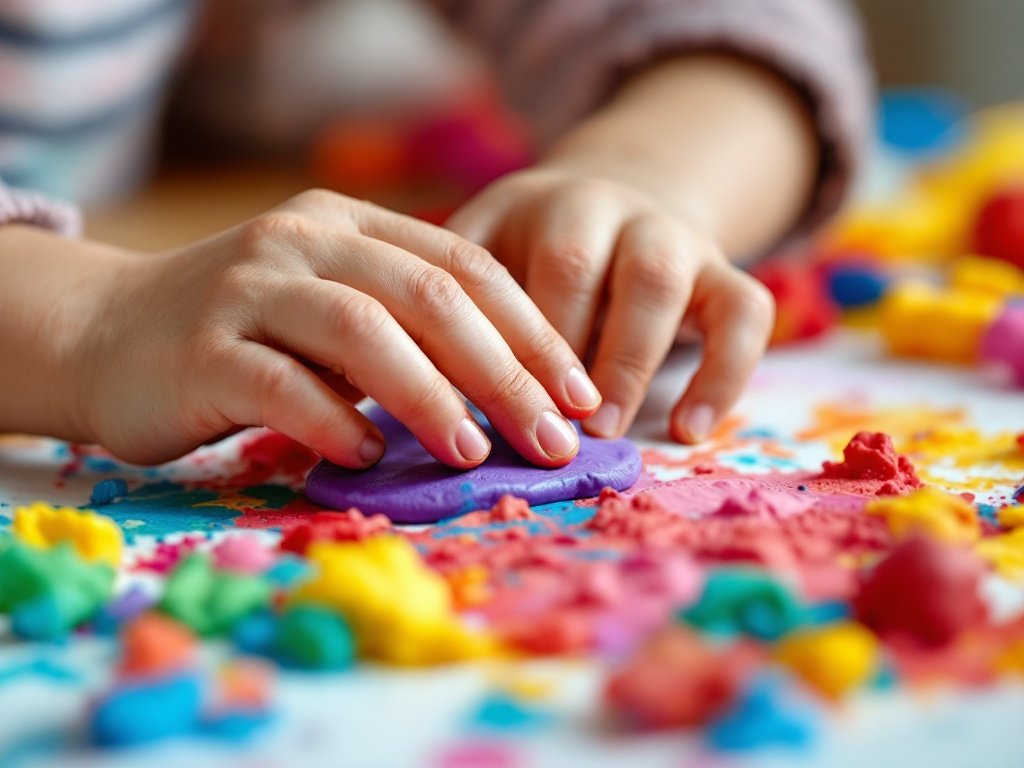
The Role of Clay in Developing Fine Motor Skills
Clay activities are excellent for developing fine motor skills in young children. Manipulating clay requires precision and control, strengthening the small muscles in the hands and fingers. These skills are essential for writing and other tasks requiring dexterity. By engaging in clay activities, children can improve their hand-eye coordination, develop their spatial awareness, and enhance their problem-solving abilities.
For more insights on the importance of fine motor skills, you might find our article on Developing Fine Motor Skills Through Art useful.
Conclusion: The Lasting Impact of Clay Art on Early Childhood Education
Incorporating clay into early childhood art education offers lasting benefits. It nurtures creativity, enhances motor skills, and supports cognitive development. By providing opportunities for exploration and expression, clay art projects can have a profound impact on young learners. By engaging in these activities, children can develop a lifelong appreciation for the arts and gain valuable skills that will serve them well in the future.
YOU MIGHT ALSO LIKE...

Korean Dansaekhwa, or the art of monochrome painting, represents a profound and meditative approach to art that emerged in Korea during the...
April 11, 2025
In today's ever-evolving corporate environments, flexibility is key. Companies are increasingly seeking art solutions that adapt to their changing needs, and removable...
April 5, 2025
Corporate giving programs are initiatives where businesses allocate resources, either financial or in-kind, to support charitable causes. These programs play a pivotal...
March 28, 2025
